Where this
actually leads.
Age 6 to 18, block coding to professional developer. Three routes, each one a course at a time, each ending somewhere a parent can picture.
Robotics Engineer
For the child who takes things apart. This path stays physical the whole way through.
See the pathGame Developer
For the child who already spends their weekends inside games and has started wondering how they are made.
See the pathSoftware Developer
For the child who likes solving the puzzle more than the pictures — and for the one aiming at a computer science degree.
See the path- Beginner Usually ages 7–10
- Intermediate Usually ages 11–14
- Advanced Usually ages 15–18
- Optional Off the main path
The same four levels the classes are timetabled under in our student portal. A child joins the level that fits them, not the one their age suggests.
From building robots to engineering real systems
-
MicroPython Intermediate
- Python running on hardware
- Pi Pico W with WiFi
- IoT basics
-
Robotics Pro Advanced
- Raspberry Pi and full Linux
- AI, computer vision, ROS
- Capstone project
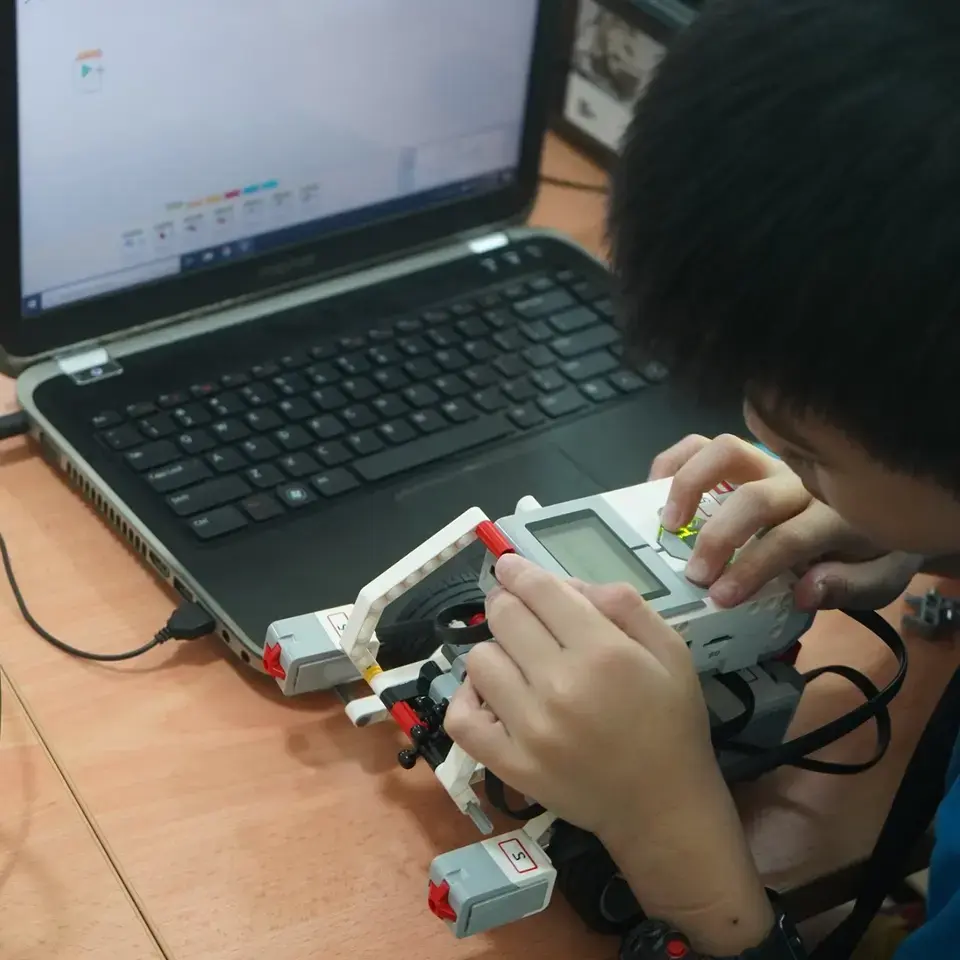
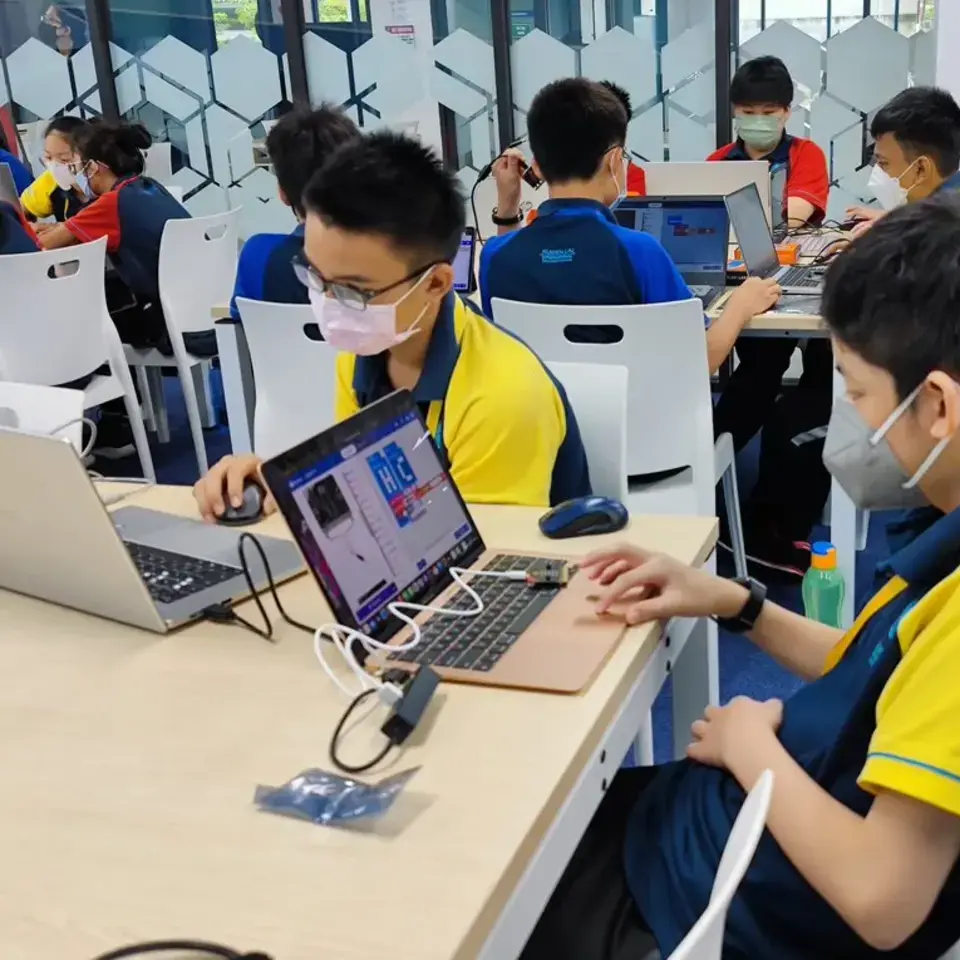
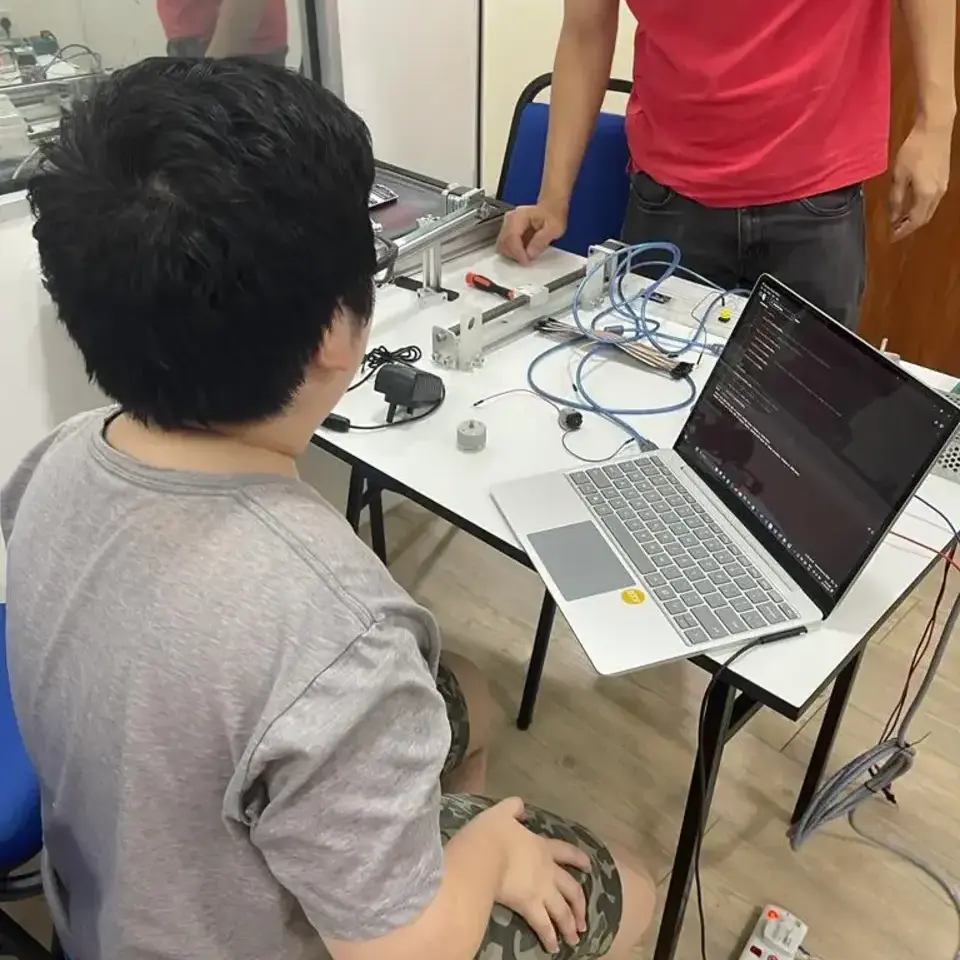
The hardware they actually build on
Where it leads
Real jobs, and what each one actually involves.
Robotics Engineer
Designs machines that sense their surroundings and act on them — in factories, warehouses, hospitals.
IoT Developer
Connects physical devices to the internet, from home sensors to industrial monitoring.
Embedded Systems Developer
Writes the software inside things that are not computers: cars, appliances, medical equipment.
AI / ML Engineer
Builds the models that let a machine recognise, predict and decide.
Hardware Startup Founder
Takes a physical product from prototype to something people can buy.
From player to creator to professional
-
GDevelop Intermediate
- Visual events, still no code
- A real engine
- Publish to itch.io
-
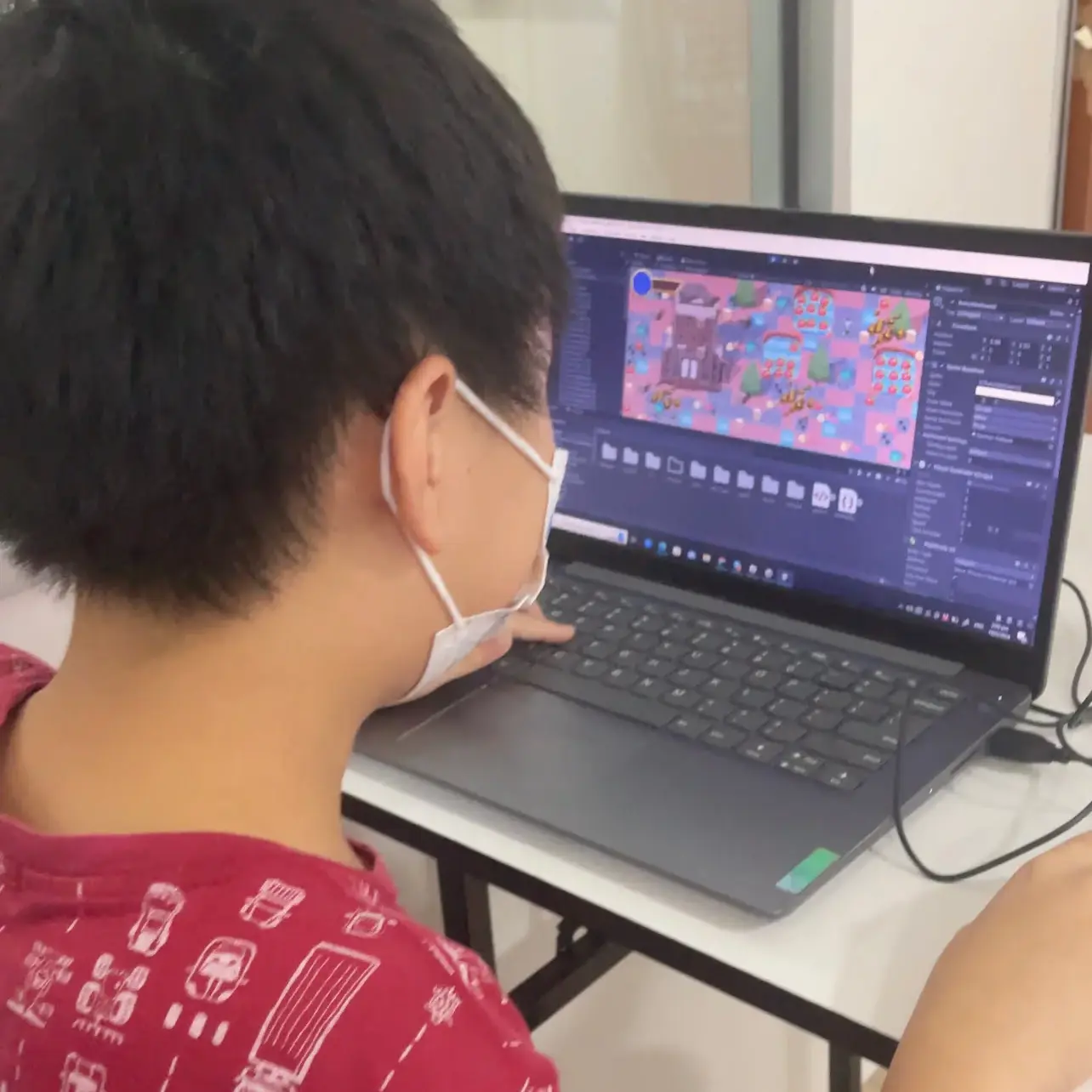
Unity Advanced
- C#
- Mobile games
- Publish to the App Store
-
Unreal Engine Optional
- Blueprints and C++
- AAA-scale tooling
- Elective / bootcamp


What they publish, and when
Where it leads
Real jobs, and what each one actually involves.
Mobile Game Developer
Builds the games people play on their phones, for a studio or on contract.
Indie Game Developer
Runs their own small studio, or ships games solo and keeps the revenue.
AAA Game Programmer
Works inside a large studio on the blockbuster titles, usually on one specialised system.
Game Designer
Decides how a game plays — the rules, pacing and difficulty — rather than writing all the code.
Freelance Game Developer
Takes contract work from studios and publishers, choosing their own projects.
From block coding to full-stack and certified Python developer
-
 The course
Python Intermediate
- Text coding for the first time
- L1: basics and variables
- L2–L4: OOP, data, APIs
-
PCEP → PCAP → PCPP Optional
- Python Institute certification
- Recognised internationally
- Sat as real exams

The tools they graduate through
Where it leads
Real jobs, and what each one actually involves.
Full-Stack Developer
Builds both halves of an application — the screens people see and the server behind them.
Python Developer
Writes the systems that run behind the scenes at almost every technology company.
Data Scientist
Turns messy real-world data into decisions companies actually act on.
Backend Engineer
Owns the databases, APIs and infrastructure the rest of a product depends on.
Certified Programmer
Holds credentials employers recognise on sight, which matters most early in a career.
Every path has the same bottleneck.
Look at all three routes and you will see the same step: somewhere between 10 and 14, blocks become text. That is where self-taught children quit — the screen stops forgiving them, a missing bracket breaks everything, and nothing explains why. Getting a student through that transition is the single most useful thing an instructor does, and it is why our class sizes are capped rather than filled.
See every courseCourses are grouped by level — Beginner (7–10), Intermediate (11–14), Advanced (15–18) — and a child joins whichever level fits, not whichever one their age suggests.
The skill outlasts the job title.
None of this depends on your child becoming a professional developer. The three ladders above are examples of where the path can end, not the reason to start it.
-
No qualification guarantees a seat
AI already does a great deal of work people used to be paid for, and it will do more. What it does not do is think on its feet — diagnose a fault nobody documented, decide which part of a mess actually matters, and change approach when the first answer fails. That gap is where the work is going.
-
Problem solving is the real subject
Robots and code are the material, not the point. What a child is practising every week is troubleshooting, critical thinking and the habit of changing one thing at a time until something works. That transfers to medicine, law, business and everything else.
-
Technical fundamentals compound
Say a child decides at twenty that they want to build rockets. One who has already built robots, wired circuits and written control code does not start from nothing — they start holding electronics, control systems and programming, and add the physics. Every later jump is shorter for the same reason.
-
Learning faster is the advantage
Nobody fits every subject into one head, and nobody needs to. What decides how far someone gets is how quickly they can pick up the next thing — and that is a function of how solid the fundamentals underneath already are.


Which is why we make them try first
Active learning, every session: read the brief, predict what will happen, test it, be wrong, work out why. A child who is comfortable being stuck is a child who keeps going. Shape that early and they take charge of their own learning — which is the part nobody can automate, and the part that decides what they achieve.
READY?
Not sure which path fits?
Bring them to a free 90-minute session. We put them in front of the real tools and you both find out quickly.